
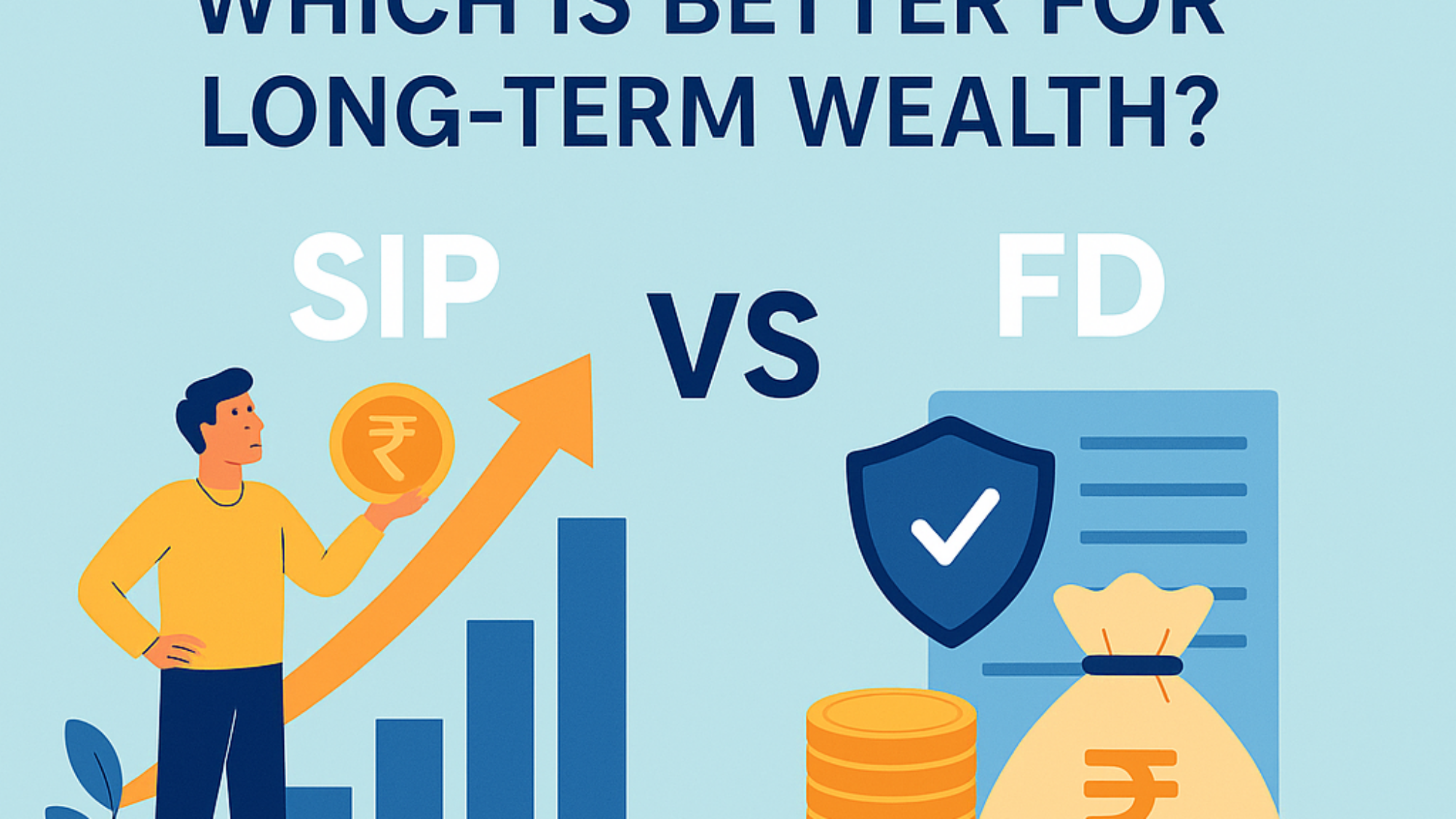
SIP vs FD: Which is the Better Investment Option for You?
When it comes to investing your hard-earned money, two of the most popular choices in India are Systematic Investment Plans (SIPs) and Fixed Deposits (FDs). Both serve different financial goals and risk appetites.
If you’re wondering which one suits you better, this guide will help you understand the difference between SIP and FD, their benefits, and which option you should choose.
What is a SIP (Systematic Investment Plan)?
A Systematic Investment Plan (SIP) allows investors to invest a fixed amount of money regularly in a mutual fund. It’s a disciplined approach to investing, ideal for those looking to build wealth gradually.
Key Features of SIP:
Market-linked returns: SIPs invest in equity or debt mutual funds, so returns depend on market performance.
Rupee cost averaging: Investing regularly helps reduce the impact of market volatility.
Power of compounding: Long-term SIPs benefit from compounded returns.
Flexible investment amount: You can start SIPs with as low as ₹500 per month.
High liquidity: You can redeem your investment anytime (except ELSS funds with a 3-year lock-in).
✔ Rupee-cost averaging
✔ Power of compounding
✔ Disciplined long-term investing
Best for: Moderate to high-risk investors looking for long-term wealth creation.
What is an FD (Fixed Deposit)?
A Fixed Deposit (FD) is a traditional savings instrument offered by banks and NBFCs. You deposit a lump sum amount for a fixed tenure at a predetermined interest rate.
Key Features of FD:
Guaranteed returns: FDs offer fixed and assured returns, unaffected by market fluctuations.
Low risk: Ideal for conservative investors who prioritize capital protection.
Flexible tenure: Tenure ranges from 7 days to 10 years.
Tax-saving options: 5-year tax-saving FDs qualify for deductions under Section 80C.
Premature withdrawal: Available with a penalty charge.
Best for: Conservative investors seeking capital safety and predictable returns
📊 SIP vs FD: A Quick Comparison
| Feature | SIP (Systematic Investment Plan) | FD (Fixed Deposit) |
|---|---|---|
| Returns | Market-linked (8–15% on average) | Fixed (5–8%) |
| Risk Level | Moderate to High | Low |
| Liquidity | High (except ELSS) | Moderate |
| Taxation | Capital gains tax applies | Interest taxed as per income slab |
| Investment Mode | Monthly or periodic | One-time lump sum |
| Ideal For | Long-term wealth creation | Short-term capital preservation |
Which is Better: SIP or FD?
The right choice depends on your financial goals, risk appetite, and investment horizon.
Choose SIP if you want higher returns, can tolerate short-term market fluctuations, and have a long-term goal (like retirement or wealth creation).
Choose FD if you prefer guaranteed returns, low risk, and short-term financial stability.
For maximum benefit, many investors maintain a balanced portfolio by investing in both SIPs and FDs — combining growth with safety.
Real-Life Example: ₹5,000 Monthly SIP vs FD (5 Years)
| Investment | Value After 5 Years |
|---|---|
| FD @ 7% | ₹3.57 lakh |
| SIP @ 12% average market return | ₹4.03 lakh |
| SIP @ 15% return | ₹4.35 lakh |
Expert Insights
Financial planners often recommend:
20–30% of portfolio in FDs for stability
70–80% in SIPs for long-term growth (for moderate-risk investors)
Experts highlight that SIPs consistently outperform FDs over 7–10 years, making them ideal for wealth creation.
Most Common Mistakes When Choosing SIP vs FD
Avoid the following:
Investing only in FDs (risk: inflation erosion)
Expecting SIPs to give high returns in the short term
Not matching investment to financial goals
Ignoring taxation differences
Stopping SIPs during market downturns
FAQ
Yes. A hybrid approach balances stability (FD) with growth (SIP).
No. SIPs are market-linked; FDs offer guaranteed returns.
Most platforms allow SIPs starting from ₹100–₹500 per month.
FD is better for short-term goals. SIPs need longer duration for effectiveness.
Yes, in the short term. But long-term SIPs (7+ years) rarely deliver negative results.
No. FD returns often fail to beat inflation.
SIPs, especially equity SIPs, are more tax-efficient than FDs.
Final Thoughts
Both SIP and FD have unique advantages. If your goal is steady, risk-free income, FDs are a safe bet. But if you want to beat inflation and grow your wealth, SIPs are the smarter choice.
Ultimately, your investment decision should align with your financial objectives, time horizon, and risk tolerance.

Add a Comment